🎨 The Alla Prima Studio
Paint while the impression is alive. Alla prima means completing a painting in one sustained approach while the paint remains wet. The goal is not reckless speed. It is clarity: seeing the large relationships, placing them decisively, and preserving the freshness of the first impression.
One painting hangs on every wall of this studio: Lady Agnew of Lochnaw (1892) — painted fresh, in very few sittings.
In the studio · Bench one
💡 The Central Idea
More memorable than history and terminology.

Place relationships, not details
- Establish the big value pattern first
- Compare every color to its neighbor
- Make each stroke carry information
Alla prima succeeds when the painter makes fewer, more meaningful decisions.
In the studio · Bench two
🎬 The Painting Sequence
Six stages, in order. Every stage protects the one before it.
The First Read
Squint and identify the largest light and dark masses.
The Big Placement
Place the head, shoulders, and major angles before features.
The Color Family
Mix broad families for light, halftone, shadow, and accents.
The Turning Form
Use temperature and value shifts to turn the form.
The Decisive Stroke
Place a few sharp, specific marks where attention belongs.
Stop in Time
Protect fresh passages instead of correcting everything.
In the studio · Bench three
🕵 Think Like Sargent
One question at a time. Answer before you reveal.
Which area should be established first?
The largest shadow mass. Sargent’s freshness depends on securing the whole before refining the parts.

Where should the hardest edge go?
The eyes. Sargent saves his sharpest accents for the focal point — nearly every other edge on the face stays soft, so the gaze wins.

Which correction would make this passage feel overworked?
Blending the sash smooth. Those visible, directional strokes are the freshness — smooth them out and the passage dies.
In the studio · Bench four
🖌 The Stroke Library
Four marks that do all the work. Find each one in the crops.
Block
A broad stroke that establishes a major shape.
Turn
A stroke that changes value or temperature to describe form.
Cut
A precise stroke that sharpens an edge or corrects a silhouette.
Accent
A small, high-impact mark reserved for the focal area.
In the studio · Bench five
⚖️ Fresh or Overworked?
Two versions of the same passage. Click the one that preserves the first impression.
In the studio · Bench six
⏱ The 45-Minute Alla Prima Study
Your mission: paint one simple subject without chasing detail.
Observe, compose, and mix the major color families.
Place the large light and shadow shapes.
Turn the form using temperature and value.
Clarify the focal point and strongest edges.
Remove anything unnecessary and stop.
The three rules
1. No tiny brushes during the first 30 minutes.
2. No isolated details before the whole reads.
3. Every stroke must change shape, value, color, edge, or direction.
In the studio · Bench seven
♟️ Play: What Comes Next?
Put these decisions to the test — one move at a time.
A painting is paused mid-sitting and three moves are on the table. Choose the one that keeps the paint alive — a warm-up on three simple fruit still lifes first, then Lady Agnew herself. Almost like chess, with wet paint.
In the studio · Bench eight
🎥 Watch a Sitting
Three painters, three subjects — from a single egg to a finished portrait.
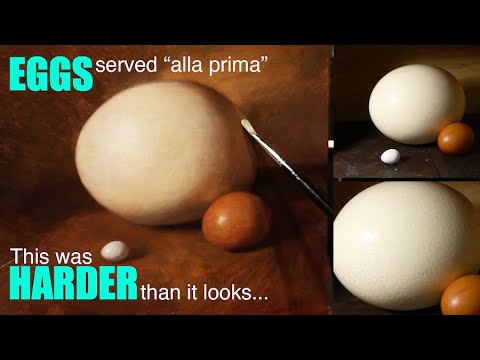
Painting a Simple Egg, Three Ways
Andrew Tischler · start here
Look out for
- The whole egg massed as light-versus-shadow before any detail.
- One soft highlight, placed once and left alone.
- The cast shadow anchoring the egg in a stroke or two.
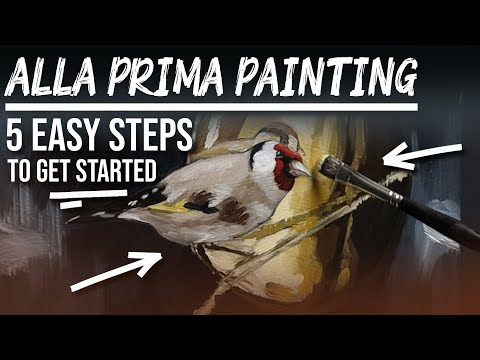
Alla Prima in Five Easy Steps
Florent Farges · getting started
Look out for
- The big value structure stated first — the same first read as Bench Two.
- How few colors mix the whole study.
- Where he chooses to stop, before it tightens up.
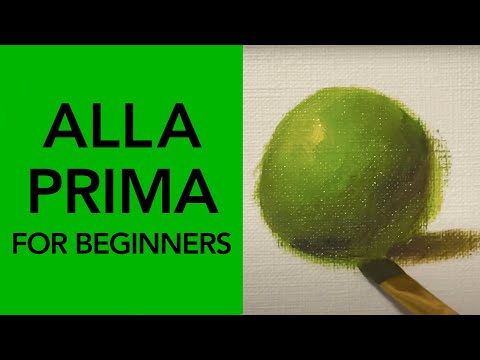
Alla Prima Explained, in One Sitting
Mark Liam Smith · going further
Look out for
- Every passage kept at the same level of finish as the painting grows.
- Temperature shifts turning the form, instead of blending.
- The decisive final strokes going in last.
Set a timer, pick a simple subject, and stop while it still breathes.
Painted one? Show Hannah — or better, bring it to class.