
The Starry Night, 1889
🖌 Vincent van Gogh
1853–1890 · THE NETHERLANDS · PARIS · ARLES
Vincent painted seriously for only ten years, sold almost nothing, and changed painting forever. His secret is not madness — it is method. Every canvas is built from two decisions repeated stroke after stroke: which way does the mark move, and which color fights beside it? “Instead of trying to render exactly what I see before me, I use color more arbitrarily, in order to express myself forcibly,” he told his brother Theo. This room takes him at his word.
Let every stroke point somewhere — and let the complements do the feeling.
Work through the room and stamp your ticket as you go — five stamps and the room is yours. Stamps are saved in this browser.
From the gallery · Wall 1
🖊 The Mark Room
Six habits of the most recognizable handwriting in art. Hunt for them in every painting below.
Tap the painting to find each mark — the room reveals its lessons as you go.
✍️ The Stroke Is Handwriting
Every stroke stays visible — handwriting you can read a mood from.
No blending, no hiding. A wrong stroke beats a timid one.
Try: fill one page with marks you refuse to smooth over.
🌀 Strokes Follow the Form
The stroke tells you what the thing is doing.
The sky flows, the cypress flames, the field lies down in rows.
Try: before painting anything, ask — which way does it move?
🔥 Complements Make the Fire
Opposites side by side make each other burn.
Yellow against violet, red against green, orange against blue — the contrast does the emotional work.
Try: add a color’s opposite instead of more of the same.
🧱 Paint as Object
Paint laid on thick enough to cast its own shadow.
Impasto makes the surface a real object — light catches the ridge of every stroke.
Try: leave one passage proudly unpolished.
✏️ The Reed Pen Rehearsal
He built an alphabet of marks, then painted with it.
Dots, dashes, hatches and whorls — rehearsed first with a cut reed pen.
Try: make your own alphabet page of ten marks.
💛 Arbitrary Color, Deliberate Heart
A house yellower than any house, a night bluer than any night.
He exaggerated color to say what it felt like — not to copy what it looked like.
Try: paint the feeling’s color, not the object’s.
🎯 TRY THIS — The Stroke Compass
Copy one small square — ten centimeters — of the Starry Night sky with a marker, pastel, or brush pen. Rules: no blending, every stroke must point the way the current flows, and count your strokes as you go. Most students need about sixty. Then paint the same square with strokes going every which way, and compare. That difference is what direction alone can do.
From the gallery · Wall 2
💌 Dear Theo
Six hundred letters, one believing brother — and a working secret hiding in plain sight.

Self-Portrait, 1889 · Musée d’Orsay, Paris
Nearly everything we know about how Vincent thought, we know because he wrote it down — more than six hundred letters to his brother Theo, the Paris art dealer who believed in him, paid his rent, bought his paint, and never stopped answering. In the letters Vincent often describes a painting before he makes it: the exact yellows of a café at night, the blue a sky will need, which complement will sit beside which.
That is the working secret: he could say the picture in words first. The color plan came before the brush ever moved. Six months after Vincent died, Theo died too — and it was Theo’s widow, Johanna, who spent the rest of her life publishing the letters and lending the paintings until the world finally saw what Theo had always seen.
Try his trick: before your next painting, write one sentence — what color is the feeling, and which way does it move? Keep the sentence beside your easel while you work.
Read one real letter — all six hundred are free online →
The letters became a book
Van Gogh: The Life
Those six hundred letters became the definitive life. Naifeh and Smith built it straight from Vincent’s own words — the fullest telling there is of how the marks, the colour, and the man came to be. Long enough to live inside for a summer.
🎧 Listen on Audible →📚 Prefer to hold a book? The whole library is next door — The Reading Room →
From the gallery · Wall 3
🧰 The Studio
Ten years of paintings came out of one small kit. Nine objects he actually held — and the legend becomes a worker.
🎨 The Palette
A dinner tray loaded with brand-new fire.
Chrome yellow, ultramarine, emerald, vermilion — industrial pigments barely older than Vincent himself. His blaze was partly chemistry.
🖌 The Brushes
Stiff hog-bristle, worn flat with work.
A soft brush hides the stroke; a stiff one signs it. He bought them cheap and used them up.
🧴 The Paint Tubes
Portable paint was newer than the bicycle.
Collapsible tin tubes let him carry the whole studio into the wheatfield. No tubes — no Provence painted outdoors.
📐 The Canvas Sizes
He ordered canvases by number, like shoes.
Most Arles masterpieces sit on a French “size 30” — about 92 × 73 cm. Constraint first, freedom inside it.
🖊 The Reed Pens
Cut from river reeds with a pocket knife.
Dots, dashes, hatches, whorls — one cheap pen taught his hand the whole alphabet of marks.
💌 The Letters
A sketchbook written in words.
He often mailed Theo a drawing of a painting before he painted it — the plan existed on paper first.
🗾 The Japanese Prints
His design school hung on his walls.
Hiroshige and Hokusai — flat color, bold outline, compositions cut by the frame. He copied them outright and kept the lesson.
🏕 The Field Easel
Staked to the ground with iron pegs.
The mistral wind fought him for every canvas. Painting outdoors was a physical, muddy, wind-blown job — and he kept going out.
🔪 The Palette Knives
For scraping failures and troweling skies.
When the brush was too polite, the knife laid paint on like mortar — and scraped the bad days back to bare canvas.
🎯 TRY THIS — The Kit List
Write your own studio inventory: every brush, pen and color you actually use, one line each, one page. Vincent’s whole decade came out of a kit this small — knowing yours is the first step to using all of it.
From the gallery · Wall 4
🖼 The Collection
Four canvases worth reading stroke by stroke. Squint first, then follow the direction of the marks.

Wheatfield with Crows · 1890
Find the stroke: the wheat is horizontal dashes, the sky is pressed-down blue, and every crow is just two dark marks. Almost nothing — and everything.

The Bedroom · 1888
Find the stroke: calm on purpose — big flat shapes, quiet marks. He wrote that this picture was meant to rest the brain. Even stillness is a stroke decision.

The Night Café · 1888
Find the stroke: red walls against a green ceiling — he said he wanted to show the terrible passions of humanity with red and green — and halos of little strokes around every lamp.

Sunflowers · 1888
Find the stroke: yellow on yellow on yellow — proof that you can build a whole painting inside one color family and let texture and direction do the rest.
From the gallery · Wall 5
🎬 The Cinema Wall
🎬 Step into the Screening Room →Movies about Vincent — each one a different answer to the same question: what did it feel like to see the way he saw?

Loving Vincent
2017 · painted frame by frame
👁 Watch for: sixty-five thousand frames, each one an oil painting — his strokes literally move.

At Eternity’s Gate
2018 · Julian Schnabel
👁 Watch for: the camera walks the wheat fields at his eye level — light the way he saw it.

Lust for Life
1956 · Vincente Minnelli
👁 Watch for: Technicolor doing complementary color at full volume.
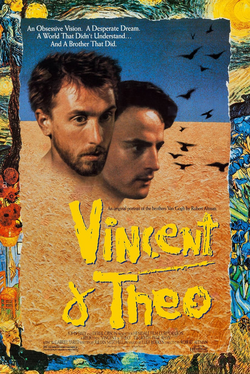
Vincent & Theo
1990 · Robert Altman
👁 Watch for: the brotherhood from the letters, brought to life on screen.
From the gallery · Wall 6
🎥 The Technique Reel
🎞 The projector is warming up
Hannah is choosing the technique videos for this room — pastel, impasto, mark-making. Check back soon, or send in a favorite.
From the gallery · Wall 7
🏋 Keep Training
👁 Train Your Eye with Vincent
- 🌡 Temperature Detective — warm against cool is the engine of every Van Gogh. Train your thermometer.
- ⚖️ Value Detective — squint: even his wildest color sits on a quiet value plan.
- 🎨 The full Train Your Eye gym — all the games in one room.
🎨 Where we teach it: Art from Art
Vincent taught himself by copying — Millet, Delacroix, Japanese prints — and made every copy unmistakably his own. That is exactly what we practice in Art from Art.
Open the course →Copy one Van Gogh sky patch a week — marker, no blending, count your strokes. In a month your marks will have a spine.
Know a video or a painting that belongs in this room? Tell Hannah.